Dysautonomia & POTS Support
Somatic and breath-led support for dysautonomia and POTS, from someone who lives with it too.
What is Dysautonomia
Dysautonomia is a general term for conditions where the autonomic nervous system — which controls heart rate, blood pressure, digestion, and temperature — doesn't regulate the body the way it should. Because it affects so many systems, symptoms are often missed, mislabelled, or dismissed.
POTS (Postural Orthostatic Tachycardia Syndrome) is one of the more recognised forms: an abnormal rise in heart rate on standing, often with dizziness, fatigue, and fainting.
If this sounds familiar, you've probably also found that standard exercise, breathwork, or yoga doesn't account for orthostatic intolerance, and can sometimes make things worse. That's not you doing it wrong. It usually just means the approach wasn't built for a dysregulated nervous system.
You don't have to keep up with everybody else. You just have to find what works for your body.
And I'm here to help you do that.
Victorias story
For a long time, my body was a mystery I couldn't solve.
As a teenager I started having fainting episodes, unexplained and unpredictable, With countless tests, epilepsy ruled out and labels tried and discarded, the medical system didn't quite have a box for me. Add in hormonal fluctuations, PMS and hypermobility I struggled with alot of injuries and keeping up with the pace of life around me meaning I spent a long time feeling like I was fighting my own body
I began to explore somatics and embodied movement. Not as a fix, but as a way to listen. For the first time, I started developing a real relationship with my body - one built on curiosity rather than frustration.
Over time, what had felt like a collection of confusing, disconnected symptoms began to make sense under one roof: dysautonomia - a sensitivity of the autonomic nervous system that affects heart rate, blood pressure, hormones, energy, and so much more.
Dysautonomia isn't something you fix. It's something you learn to navigate. And what I've discovered, through years of practice, study, and honest body listening — is that the more you can understand and respond to what your nervous system is doing, the more agency you gain. The difference between things just happening to you, and being able to meet your body where it is.
That is at the heart of everything I offer.
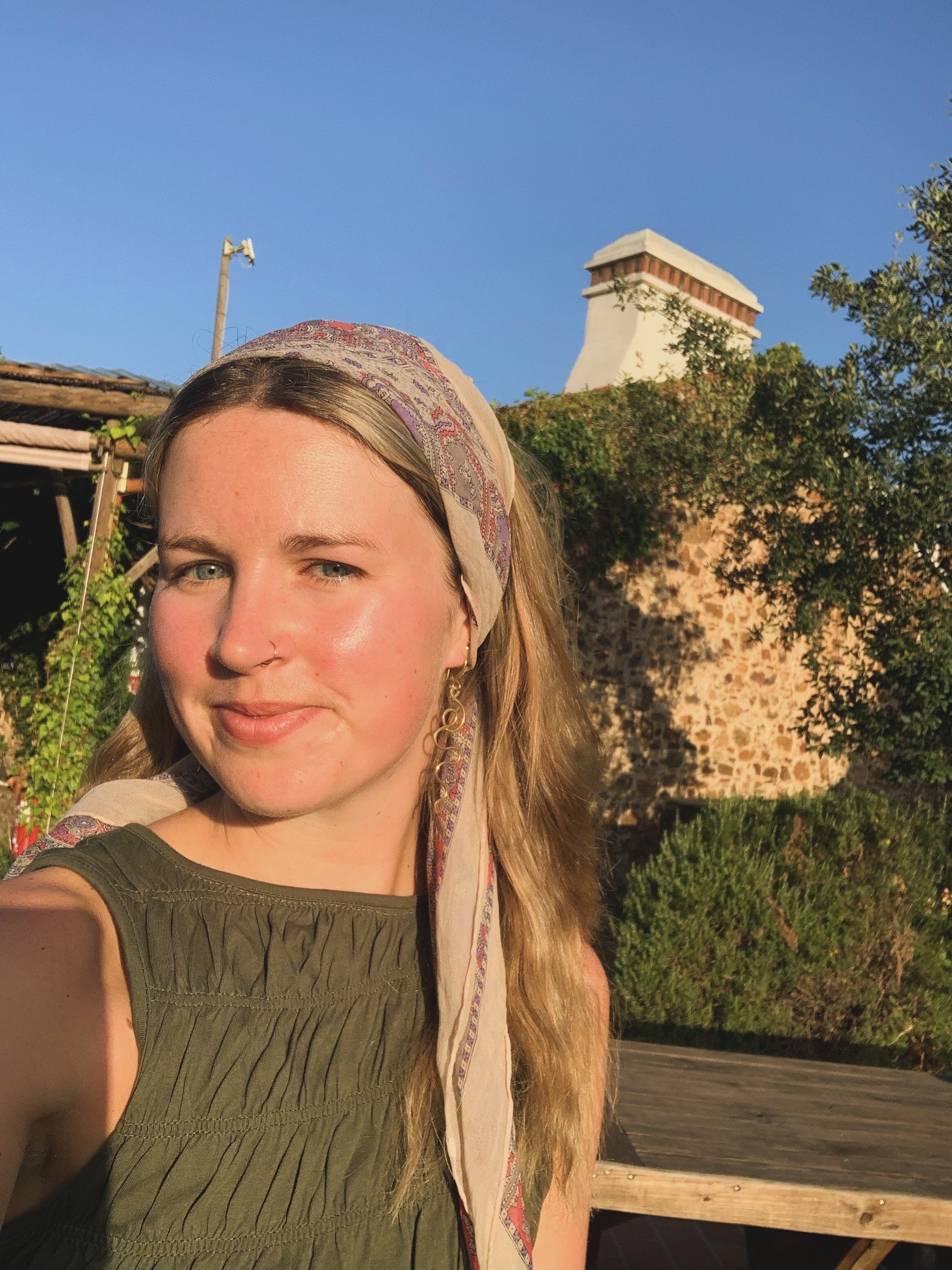
For a long time, my body was a mystery I couldn't solve
What support actually looks like
Together, we work on:
Understanding your patterns: learning what tends to trigger flares, dips, and crashes, so they feel less random
Regulating in real time: breath and somatic tools you can actually use when you're symptomatic, not just when you're feeling fine
Rebuilding trust with movement: adapted, nervous system aware approaches to breathwork and movement that don't push you past your window of tolerance
Reducing the "fight" response: shifting from bracing against your body to working with it
A container to actually use the tools: you've probably seen breath and somatic techniques on social media already. Knowing them and using them are different things. Having somewhere to bring what's actually happening, week to week, is what makes them stick
I'm not here to hand you a generic wellness routine. I'm here to help you build a working relationship with a nervous system that's sensitive and entirely your own.
This isn't about pushing through. It's about learning what your body needs, and having the tools to respond to it.
Change starts here: Welcome to Attune
A personalised, 3-month programme for people navigating dysautonomia, POTS, or chronic nervous system dysregulation. It's built around your body, your patterns, and your pace — with the accountability and guidance to actually use the tools, not just collect them.
Over three months, you're not just collecting techniques. You're building an ongoing, responsive relationship with your own nervous system, one that holds up outside the session room.
What's included:
12 personalised 1:1 sessions — 1:1 work tailored to your symptoms, history, and how your body responds week to week
Weekly guided meditations — designed to support you build a more consistent practice
Daily tools and practices — simple, practical techniques you can draw on between sessions, in the moments you actually need them
What others have said
It's been so helpful, and with Victoria having her own experience with dysautonomia, I can really feel it being so much more helpful than guided exercise/breathing/physio etc. in the past that haven't accounted for this at all and made things worse
Lucy, a client struggling with dysautonomia
It was absolutely what I wanted and needed. I had given up yoga and with it slow breathing because of POTS and this is helping me
Jenny, client struggling with dysautonomia
FAQs
-
This is a common experience, and it's usually because the approach wasn't designed with dysautonomia or POTS in mind. This work is built specifically around nervous system sensitivity and orthostatic intolerance, adapting pace, position, and practice to what your body can actually tolerate
-
No. Many people come to this work while still going through the diagnostic process, or after being told there's "nothing wrong" despite ongoing symptoms. You don't need a label to start building a better relationship with your body.
-
No. This work sits alongside medical care, not instead of it. It focuses on nervous system regulation and body awareness, and is not a substitute for diagnosis, medication, or treatment from a doctor or specialist.
-
POTS (Postural Orthostatic Tachycardia Syndrome) is a form of dysautonomia where the heart rate increases abnormally on standing, often causing dizziness, fatigue, and fainting. It's one of the more commonly recognised forms of dysautonomia, though it's still frequently missed or misdiagnosed.
-
Dysautonomia is a broad term for conditions in which the autonomic nervous system doesn't regulate itself properly. Since the autonomic nervous system controls involuntary functions like heart rate, blood pressure, digestion, and temperature control, symptoms can be wide-ranging and often don't fit neatly into a single diagnosis.
-
Standard breathwork isn't always appropriate for POTS or dysautonomia, and some approaches can worsen symptoms. Breath-led practices that are adapted for orthostatic intolerance and nervous system sensitivity can help support regulation, but they need to be tailored, not generic
-
This work comes from lived experience of dysautonomia, as well as professional training. Practices are adapted specifically for those navigating long term health challenges, rather than applied as one size fits all.
Sometimes you also need a space to be held - as much as you may know what is good for you, it is so hard to show up. Through this programme you will have a container of support that provides accountability and guidance to build a regular rhythm
The difference between things just happening to you, and being able to meet your body where it is.
Book a free 15 minute discovery call
To discuss how we can work together, get in touch to set up a free 15 minute discovery call